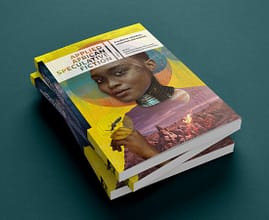
Applied African SF: Volume 1
Applied African SF published by Ping Press (2026). Free to download at bit.ly/AppliedAfricanSF

Applied African SF published by Ping Press (2026). Free to download at bit.ly/AppliedAfricanSF

"Thirteen years ago, a virus struck and destroyed humanity as we knew it. At least that was the story we were told."

"Being offline from Orisis, my artificial intelligence mother governing Pinaa, the inhabited moon of Mahwé, means I am unable to find a solution or explanation for this scenario. I cycle through microseconds of data, yet even with a world of knowledge built into my system, along with a billion iterations of an action, I cannot find a reason for my abduction mere hours ago."

"They called themselves the Gaia Accord. A group of elites and technocrats that pushed for global technocratic stewardship. Governments replaced by systems, presidents replaced by panels, parliaments by predictive models. The climate collapse had come faster than anyone expected, and in the aftermath of the Migration Years, the famines, the water wars, the pandemics that never ended, people were too tired to argue. That they controlled Lethal Autonomous Weapons through their monopoly over AI systems, meant arguing was futile anyway."

"Here we are. Six magnificent black rhinos, muscles rippling under thick, wrinkled hides – the first to tread this earth in more than a decade since the last beast died alone in a miserable British zoo. Granted, they’re all young still – mere babies, according to Theuns Theunissen, director of Houmoed Private Game Reserve. Dear god, I loathe that man with the power of a hundred suns going nova. He looks like he’s stepped out of one of those nature doccies on one of the major streaming services – all blond, with a tan out of a bottle, and his teeth so white they must’ve cost as much as a small car. Apparently, he’s eighty, but doesn’t look a day over forty. Amazing what money can do. Especially when it comes to scrubbing what he did to a young, upcoming influencer at a product launch five years ago."
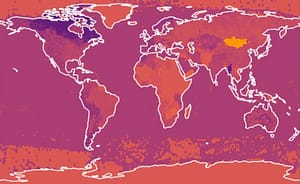
"The other ’mancers spoke first and no one had good news. Even those who reported fewer abnormalities in their readings remained baffled by the lack of rain, the absence of the turtles, the thinning schools of fish, and the withering crops."

"When children in my region completed their schooling, they left to live and work at The Centre. Other children in other regions went to the ships to lay undersea cables. In the poorer regions, they went to work underground in the lithium mines. In some parts of the world, we were told there were Centres located underwater, and even some in outer space. But I couldn’t imagine my people living under the sea or up in the sky. We were people of the land, and our memory was in the soil."

"Technology had improved on most things except housing, poverty, social injustice, the climate, inequality of women and scarcity of water. It did allow for crematorium distillates, units that pulled water, evaporating, condensing, in biological recycling to keep water alive from dead corpses."

"She smiles. It never gets old to her, the act of growing something for the first time. She remembers sprinkling the tiny dry seeds onto moist soil and leaving the planter, a rose-gold tin out in the sun. She wonders what the tin used to be, in its past life, a hundred years ago. What it was first filled with, all the things it’s carried and will carry in the future. For now, it carries fragile life."

"The campaign was slowly yielding fruits, with the whole village collectively involved in fighting the epidemic. Then, a company calling itself Pest and Germ Control Corporation came up with a new method. It had modified the genes of the anopheles and created a new species that does not carry malaria parasites. It called this breed Miss Doe. It asked the government for a trial site. A powerful politician influenced the Ministry of Health to choose Abedo. He thought the project would bring employment to his people, and thus increase his popularity. Genetic scientists from PGCC then camped in the area, and introduced Miss Doe. Their plan was to out populate and replace the naturals with the disease free bugs. A simple plan. A great plan."