
Rusties
"From that day on, Rusty Ndege and I seemed to have a special bond, me being one of few people who actually spoke to it like a person. For most, machines were just machines."

"From that day on, Rusty Ndege and I seemed to have a special bond, me being one of few people who actually spoke to it like a person. For most, machines were just machines."

Applied African Speculative Fiction – Volume 2 Following the forthcoming publication of Applied African Speculative Fiction: Volume 1 (Ping Press, 2026), we are pleased to announce a new call for…

"Being offline from Orisis, my artificial intelligence mother governing Pinaa, the inhabited moon of Mahwé, means I am unable to find a solution or explanation for this scenario. I cycle through microseconds of data, yet even with a world of knowledge built into my system, along with a billion iterations of an action, I cannot find a reason for my abduction mere hours ago."

"They called themselves the Gaia Accord. A group of elites and technocrats that pushed for global technocratic stewardship. Governments replaced by systems, presidents replaced by panels, parliaments by predictive models. The climate collapse had come faster than anyone expected, and in the aftermath of the Migration Years, the famines, the water wars, the pandemics that never ended, people were too tired to argue. That they controlled Lethal Autonomous Weapons through their monopoly over AI systems, meant arguing was futile anyway."

"When children in my region completed their schooling, they left to live and work at The Centre. Other children in other regions went to the ships to lay undersea cables. In the poorer regions, they went to work underground in the lithium mines. In some parts of the world, we were told there were Centres located underwater, and even some in outer space. But I couldn’t imagine my people living under the sea or up in the sky. We were people of the land, and our memory was in the soil."
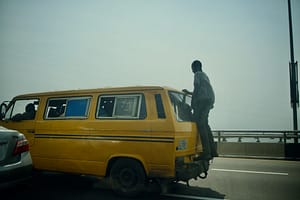
"When Oga Dayo convinced Fidelis to be his delivery driver for his No Place Like a Hobox project—an initiative aimed at “giving the homeless, low-income communities, and rural areas compact smart houses with built-in AIs”—Fidelis was sure Oga Dayo had thrown around the words revolutionise and housing policies in his pitch. Fidelis had witnessed the fallout of the project, with the houses resold by the recipients, the high cost of maintenance, which equalled an increased standard of living for said recipients, two lawsuits, and several robberies—of the recipients, the houses, and him, the unfortunate driver-guy. Oga Dayo was still dealing with the rehousing and settlement payments from that project. And that was two years ago. When Oga Dayo’s pet projects fell through, they fell through hard. Between his philanthropy and charity initiatives, he was always looking for the next big thing to put all that generational oil money into."
'She pulls a face. “Language and hidden histories matter. It’s from Kora, the tongue of the First People of the Cape, the now extinct Khoe. It means sweet water for all. The First Name for this place.”'
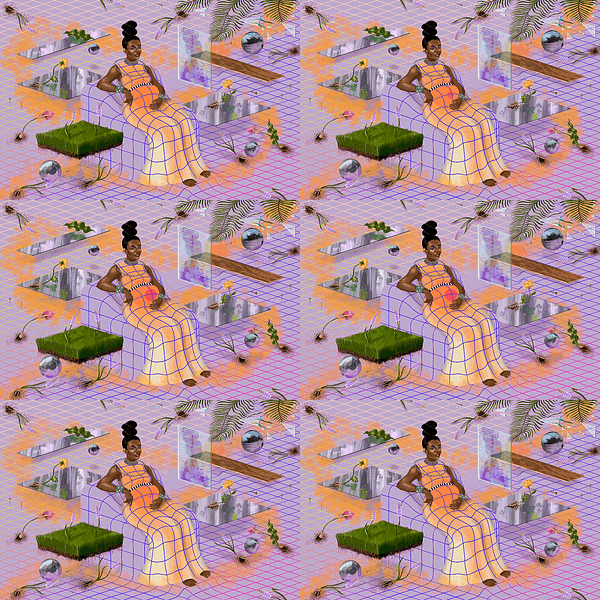
Set in New Delta, a city rebuilt on drained swampland in former oilfields, the protagonist, Chioma, is expectant and is caught up in labor during a violent, unpredicted storm linked to bioengineered periwinkle grass.

Set in a coastal region, the story explores how marine technologies, specifically the use of energy-intensive drones for precision kelp monitoring, undermine the very benefits they aim to deliver.

A story that explores the interaction between African medicinal knowledge and Western medicinal knowledge