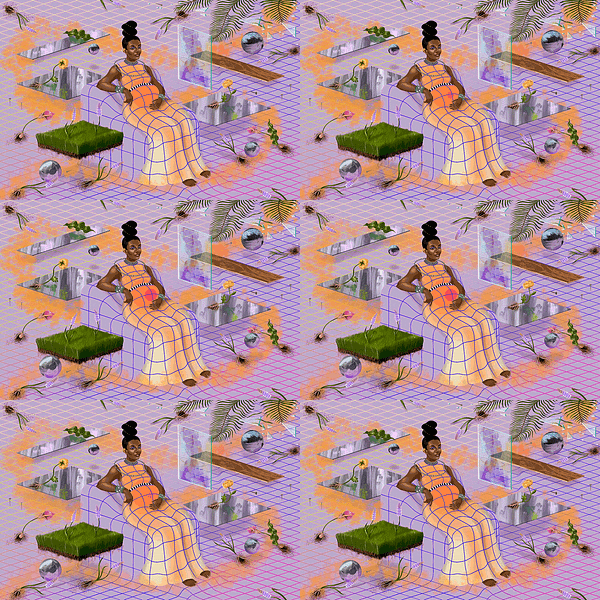
Mother of Invention
Set in New Delta, a city rebuilt on drained swampland in former oilfields, the protagonist, Chioma, is expectant and is caught up in labor during a violent, unpredicted storm linked to bioengineered periwinkle grass.

Stories that are part of the Applied African Speculative Fiction toolkit
Set in New Delta, a city rebuilt on drained swampland in former oilfields, the protagonist, Chioma, is expectant and is caught up in labor during a violent, unpredicted storm linked to bioengineered periwinkle grass.

Set in a coastal region, the story explores how marine technologies, specifically the use of energy-intensive drones for precision kelp monitoring, undermine the very benefits they aim to deliver.

The futuristic city becomes a utopian gaze, setting the stage for us to rethink and see urban planning as an intrinsic aspect of climate justice.

A story that explores the interaction between African medicinal knowledge and Western medicinal knowledge

'The Seventy-Year-Old Corpse Harvester' is the story of Tobias Williams, whose research aimed to reverse the process of death.

Set during a pandemic, the isolated and frustrated protagonist is primed for manipulation. Boredom and dissatisfaction clash internally with his low self-esteem and the very human desire for contact out in the real world. The downward spiral of negativity, conspiracies, and social media are a hotbed for disaster.

'Humans had managed to build a community up here, where no life was thought to be possible. It had been thirteen years since the Call, thirteen years since the oceans had swelled and a thousand species had ballooned overnight to titanic proportions, replacing humankind as the apex predator of the world.'

"Empathy Surplus Disorder? The droid felt cheated. The journalist had twisted and manipulated its words. It felt enraged."

Set in a landscape of intense competition among technology developers, the narrative raises critical questions about whether Africa’s future in science and innovation should be driven by collaboration over rivalry.

"Dreams could be sold too, but they were in less demand. Some memory makers took psychedelics to fuel more chaotic, desirable dreams, sold to buy the drugs to continue the cycle in a dizzying Möbius strip."