
The Whaling
A Sauútiverse Story
AI & Robotics Alternative Ways of Knowing Colonialism Culture & Society Environment & Climate Ethics & Governance Future of Work Natural sciences Toolkit Stories
“Excess energy creates sonic storms, as we all know from Órino-rin. But depletion is equally dangerous. Sound pollution, industrial harmonics, and unregulated amplification, these all thin the ambient field. When flare energy strikes a depleted system, it doesn’t heal it. It fractures it, and if left unchecked, it can produce deserts of silence.”
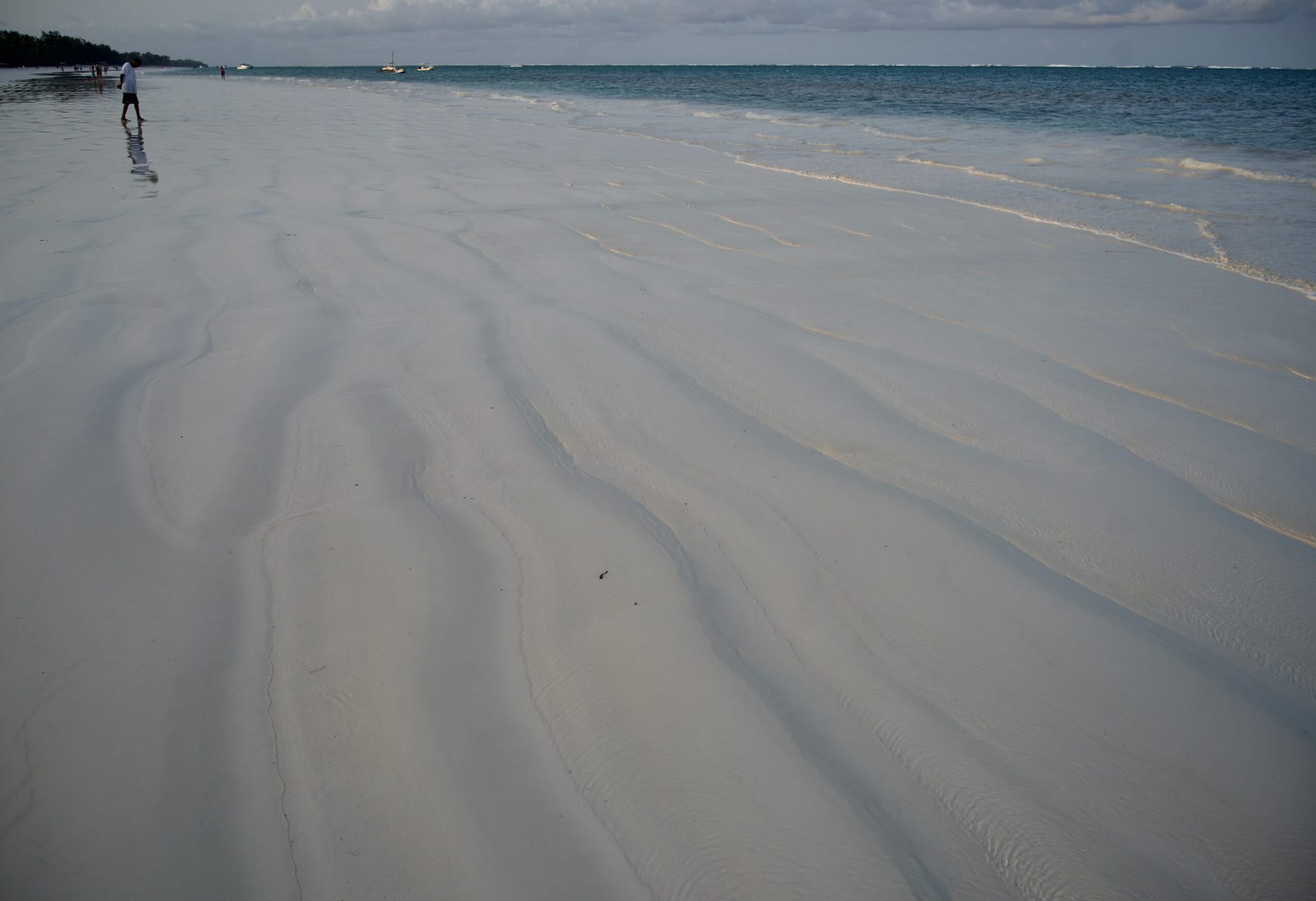
Photo: Grant Galbraith
PART 1: The Council Chamber
A tiny smile played briefly at the corners of Ani-Basinah’s lips. It was always the same with officials and politicians; wise-looking nods masking their mental scramble to grasp unfamiliar concepts. Her real challenge was pride, it seemed. If she humiliated them, even accidentally, they would destroy her grant proposal out of spite.
At five and half feet tall, Ani-Basinah was a small but formidable woman. She was dressed in the full regalia of a practicing maadiregi of the Zezépfeni Environment Ministry, and the layered fabrics and tonal sigils marked hers as an authority earned, not inherited.
Ani-Bas, as she preferred to be called, wore her robes and insignias with pride. She had fought for every one of them, and in the process became the youngest planetary sonic ecologist ever admitted into the field.
She had also become inconvenient.
Now she stood alone on the raised platform of the ministerial council chamber, heart beating too fast despite years of training, facing the Interplanetary Environment Taskforce’s selection committee. Twelve of them. Enough power to approve her work and give her the means to carry on, or to bury it completely.
The chamber curved around her in a ceremonial C. Tiered seating rose by rank and influence, and Ani-Bas felt the familiar prickle of being observed, assessed, weighed. Behind her, a vast projection filled the wall: the Sauuti binary stars burning in slow orbit, Zezépfeni turning patiently between them.
Twelve committee members sat directly opposite her, comprising distinguished elders, scholars, and senior maadiregis. Beyond them were diplomats, political appointees, and a scattering of invited observers; a few too many from the Energy Ministry for her liking. Their presence wasn’t neutral. Her mentor, Kabi-Irona, would refer to such assemblies as “eye service.” Even Mahu-Mahadii tanks had been allocated space, though they hadn’t attended any event on human soil for millennia.
Ani-Bas recognized most of the committee, including Kabi-Irona himself. Others she knew only by reputation. The rest, judging by their attire, came from every corner of the Sauuti worlds: theologians from Ekwukwe’s Mahadum, scholars from Órino-Rin’s Institute of Sound Mining with their jangling regalia. This wasn’t a courtesy briefing. It was a contest. And too many competing interests could derail her work.
Her mentor, Kabi-Irona, caught her eye and gave a near imperceptible nod. Steady. Speak cleanly. Don’t rush.
Ani-Bas lifted her chin.
“I bid good voice to the exalted council, committee, and guests on this Zeze-fine day.”
A deliberate choice, using informal vernacular to greet and connect with the committee at a human level.
“I believe that the spread of sonic voids is a direct result of sound-energy pollution. I am here to present a solution, and it’s one that may halt and reverse this growing environmental crisis across our worlds…”
“No, no, no, Ani-Bas,” said Committee Members Three, Challeh-o-Chellah, a sour-faced conjoined symbiote and Raeveggi archivist who spoke with two voices. They were a relic of interplanetary bureaucracy, and famous for dismantling promising proposals with pedantry. “Before you begin inspiring us, what exactly is a sonic void?”
They smiled thinly. The Energy delegates leaned forward, interested.
“If you mean the Silence, then say so. Some of us prefer plain language,” Chellah-o-Challeh sneered.
Ani-Bas felt heat creep up her neck. She forced it down. This mattered too much.
“Thank you, honoured committee members,” she said evenly. “Yes. The Silence. Regions where ambient sonic energy has collapsed beyond natural recovery.”
She paused, letting the word settle.
“I believe we can reverse this by reconnecting our planet to the sonic flare cycles of our binary stars.”
The chamber stirred, with interest or skepticism? Hard to tell.
“But how,” she continued, “can we harness something so unpredictable?”
She turned to the projection. Juah-āju and Zuúv’ah flared in tandem, streams of energy arcing outward.
“Stellar sonic energy does not travel as sound. Instead it converts into electromagnetic radiation. Solar flares.” She traced a flare’s path as it struck Zezépfeni’s upper atmosphere.
“That sonic energy isn’t released until it reaches the sonosphere, er, that is the sound envelope surrounding our planet and others,” she added quickly, before the archivist could interrupt again.
“The sonosphere buffers, re-converts, and redistributes the flare energy which is then absorbed, reflected or amplified by those living and non-living matter with sensitivity to it. This is how our world breathes.”
Kabi-Irona raised a hand. “If the system regulates itself,” he asked, “why is it failing?”
Because we broke it, Ani-Bas thought, but did not say.
Instead…
“Excess energy creates sonic storms, as we all know from Órino-Rin. But depletion is equally dangerous. Sound pollution, industrial harmonics, and unregulated amplification, these all thin the ambient field. When flare energy strikes a depleted system, it doesn’t heal it. It fractures it, and if left unchecked, it can produce deserts of silence.”
The Órino-Rin delegates shifted uneasily, with a chorus of chirps and clinks from their regalia. Energy ministry attendees seemed to have shrunk a little.
Committee Member Five, a matriarch of the Energy Ministry, leaned forward.
“Then why not capture the flares directly? Orbital collectors? Controlled redistribution?”
The word controlled landed like a challenge.
Ani-Bas met her gaze. “At what cost?”
A murmur swelled. This was the fault line. Everyone felt it.
“Interfering at the sonosphere risks destabilizing ecosystems we barely understand,” Ani-Bas continued. “Energy capture at that scale prioritizes yield over ecological balance.”
“Efficiency isn’t a sin,” the matriarch replied coolly.
“No,” Ani-Bas said, voice tight. “But it can also be weaponised.”
The chamber stilled.
“Hrrmmmph!” – Committee Member Seven snorted, not bothering to raise its short flipper-like hands, “Anything that feeds both sea and land must not be severed above the roots.” The seventh member was from a humanoid-amphibian species known as K’ballahs who lived mostly in the tidal zone between sea and swamps. They had strong allegiance to both aquatic and terrestrial habitats.
Relief flashed through Ani-Bas. An ally.
“Yes,” she said. “That’s why I looked elsewhere.”
“Lower?” the K’ballah asked.
“Deeper,” Ani-Bas replied.
A hush fell.
“The ocean,” she said.
Committee Member Three, Challeh-o-Chellah, bristled. “Do you propose putting machinery in the oceans; Meshe-Shekhiiyem, the Mahu-Mahadii sacred waters?”
“No. Not machinery.” Ani-Bas said sharply. The edge slipped through despite herself. “I propose cooperation with life.”
She breathed. Slowed.
“Many organisms absorb flare energy. But oceanic megafauna, specifically whales, harness nearly half of all converted sonic flare energy in marine systems. This is what was commonly known as ‘The Whaling’.”
Shock rippled outward.
“But The Whaling hasn’t occurred in ages, not in our lifetime,” someone whispered, a little too loudly.
Ani-Bas’s chest tightened. She remembered the first time she’d heard those archival recordings, ghostly, vast, alive. She remembered realizing what their absence meant.
“Because we stopped listening,” she said. “Historic data shows a precise correlation between major flares and whalesong events. The Whaling followed every significant flare.”
She swallowed, steadying herself. “The flares spoke. The whales answered.”
“And while the Whaling endured, ambient sonic levels remained stable.”
The chamber was utterly silent.
“Since it stopped,” she went on, quieter now, “the Silences have spread. Slowly. Patiently. As if waiting.”
She turned to the projection. Graphs bloomed—jagged spikes, static hiss, then smoother harmonic curves.
“Current biological responses are insufficient. The missing energy profile matches whalesong exactly.”
She faced them again. Smaller than the chamber, taller than any fear she felt.
“I am not asking to exploit the whales,” she said. “I propose to rekindle the Whaling, working with a willing pod, to prove its effect before the next flare cycle. I ask only for approval, equipment, and trust.”
Her voice wavered, just slightly. She let it.
“If we fail, we lose nothing but time. If we succeed…”
She stopped. Let them finish the thought themselves.
Silence.
Then the chairperson’s flute rang sharp and final. Presentation over.
Ani-Bas stood still, heart pounding, unable to tell whether the silence meant victory, or failure.
PART 2: A Counter Proposal
Ani-Bas stalked down the corridor toward her lab, shoes striking the polished floor harder than necessary.
“Dwa’ndenki committee members,” she snarled under her breath. “Swimming in their own ignorance.”
Two students froze mid-conversation as she stormed past, clutching their soundstone tablets like shields.
The committee’s objections replayed relentlessly in her head, looping, gnawing, like earworms. Diplomatic sensitivities. Risk mitigation. Precedent. Every phrase tasted like ash.
All her oceanic research, suspended with immediate effect.
Because of “diplomatic non-relations” with the Mahu-Mahadii.
It was a lie. Or at best, a convenient truth, one the Energy Ministry had polished until it gleamed. Everyone knew the Mahu-Mahadii had withdrawn centuries ago after one of their kind was killed in a sound-excavation incident. Since then, they had sealed themselves within their oceans, indifferent to surface politics.
But that hadn’t stopped research before. It had only stopped this research.
Her research.
The Mahu-Mahadii revered the ocean as a living sovereign. Whales, it was said, were its voice, benevolent giants woven into their hive mind and collective consciousness. If the Energy Ministry truly cared about Mahu-Mahadii sensibilities, they wouldn’t be proposing orbital flare collectors that would starve the seas from above.
Ani-Bas clenched her jaw.
She reached her lab door, palmed it open, and stopped short.
Two figures waited inside.
One was the unmistakable frame of Kabi-Irona, standing with his hands folded behind his back, calm as ever. The other stood slightly apart; tall, still, watching her with quiet focus.
Before she could speak, Kabi-Irona lifted a hand.
“Ani-Bas,” he said gently, “you may recall Obresh-Imaru. He was present at the council review with the Órino-Rin delegation.”
Recognition clicked into place. One of the silent figures in the background. Quietly observing everything. The presence of Órino-Rin delegates had been a surprise to her, given that they didn’t have much by way of open oceans, but curiosity made her hold her tongue.
Obresh stepped forward. His attire was sleek and functional, tailored for movement rather than display. His gait had a spring to it, as though one leg held subtle kinetic augmentation. He smiled, not broadly, but warmly.
“Greetings, Ani-Basinah,” he said. “I wanted to commend you. That was… not an easy room.”
She snorted. “Entertaining, I hope.”
Kabi-Irona’s eyes twinkled. “Obresh has questions. And perhaps,” he added carefully, “an interest.” He stepped back. “I will leave you to speak freely.”
As he departed, Ani-Bas felt the familiar mix of gratitude and guilt. He had already spent political capital defending her appeal. Too much more, and the council would start counting the cost.
She turned back to Obresh. “Sit,” she said briskly. “If you’re going to interrogate me, you may as well be comfortable.”
Obresh obeyed without offense.
As Ani-Bas spoke, her words came faster than she intended. All the years of hard work, model failures, recalibrations, sleepless nights listening to distorted echoes of whalesong. It all came pouring out uninterrupted. For once, no one cut in. No one tried to simplify her ideas into policy slogans.
Obresh listened. Truly listened.
At the end, he nodded slowly. “Let me see if I understand.”
She folded her arms, bracing herself.
“You can predict major sonic flare events using your sub-quantum sonoscopic models.”
“Yes,” she said. “And before you ask, yes, there’s debate about whether all stellar energy originates as sonic phenomena. That theory isn’t settled.”
He smiled faintly. “One battle at a time.”
“Next,” he continued, “you correlated historic sonic flare peaks with particularly heightened whale vocal activity locally known as The Whaling.”
Ani-Bas’s expression softened despite herself.
“Oral archives describe it as a planetary chorus,” she said quietly. “They say the ground used to hum near the sea. You could feel the song.”
Obresh paused, registering the emotion beneath her words.
“And you believe sonic pollution severed that response.”
“Yes.” Her voice hardened again. “Sonic pollution and the Silences don’t just drain environments. They deafen them. The whales can’t hear the flares anymore.”
Obresh exhaled slowly. “That will make you unpopular.”
“I already am.”
He leaned forward. “Our sonic-energy transport systems…”
“…are choking the planet,” she cut in. “Maybe not catastrophically yet. But enough to matter. Enough to silence something ancient.”
Quiet. Perhaps she’d gone too far.
“So,” he said carefully, “how does your plan avoid harming the ocean?”
Ani-Bas closed her eyes for half a second, centering herself.
“Three steps,” she said, counting on her fingers. “First: predict the next flare. It’s only days away.”
Obresh’s brows narrowed.
“Second: locate Awukah-Wah’ukah the lead whale in our cooperative pod. Relay the sonoscope’s signal in reverse to reflect the flare’s sonic signature back toward them.”
“Induced Whaling,” he murmured.
“Facilitated,” she corrected. “Then we observe.”
“And the third?”
“Measure the impact on nearby Silences.”
She met his gaze, defiant. “We’ve tested reversed sonoscopic signals at smaller scales. They work. What we needed was approval to operate at scale near the whales.”
“And the Mahu-Mahadii.”
“Yes.” Her jaw tightened. “Ironically, they could guide us better than anyone. But politics.” She shrugged.
Obresh was quiet for a long moment.
“What if,” he said slowly, “you never entered the ocean at all?”
Her breath caught.
An Órino-Rin sonic energy powered vessel, its engines capable of generating precisely tuned harmonic fields. Positioned above the sea, it could do the job without setting foot on the ocean, so to speak. No trespass. No provocation.
The realization struck her so hard she had to sit.
Mother above. It was reckless. It was elegant. Best of all, it was fully deniable.
Obresh watched the idea bloom across her face and inclined his head slightly.
“There would be… risks,” he said.
“Always are,” Ani-Bas whispered, ignoring the faint trill of alarm starting in the back of her mind.
She saw it now, the opportunity and the trap. If this failed, the Energy Ministry would devour her. If it succeeded, they would try to claim it.
Still, her chest burned with something dangerously close to hope.
Kabi-Irona’s voice echoed in her memory: Nothing ventured, nothing broken, or gained.
Ani-Bas looked up, eyes bright and afraid and alive.
“You’re offering me a ship,” she said. “And a window.”
Obresh smiled, not kindly, not cruelly. Strategically.
“I’m offering you a chance,” he said. “What happens next depends on how brave you truly are.”
She let out a short, nervous, exhilarated laugh.
“You’re on, Obresh,” she said. “Let’s wake the ocean.”
PART 3: The Whaling
BWAAAAH—BWAAAH—WAAAH—AAAAHHH—HNNNNNNNN!
Ani-Bas listened through her headset as a single baritone voice chanted the ignition chorus. Normally, the launch required a full vocal complement, layered harmonics driving the engines skyward. Today, restraint mattered more than power.
This flight was not meant to leave the world.
Outside, the Órino-Rin transport ship shuddered awake. Its sonic starter coils howled as Ririni crystals flared, releasing a cascading echo vortex that folded in on itself, feeding the sound-compression chamber. The roar collapsed into a near-silent hiss, white noise shaped precisely enough to power a single hypersonic drive.
Lift-off.
Ani-Bas recited the sequence in her mind, clinging to familiar facts as a talisman against doubt. Too much could go wrong. Equipment failure. Calibration drift. Non-responsive whales. Political retaliation.
And Obresh.
She shivered.
What had she been thinking, trusting him? Or had she simply trusted the work, and just needed someone ruthless enough to make it happen?
“Are you ok?” Obresh asked, stepping beside her on the apron. The shuttle waited nearby, humming impatiently. “Flare still holding?”
“Yes,” Ani-Bas said, glancing at the pulsing sonoscope readout on her wrist. “Stable. I’m just… cold.”
It always grew cold when sonic engines spooled, air pressure dropping as if the world itself were holding its breath.
The ship’s roar softened into a deep, subsonic thrum.
BRRRRUUUU—MMMMM.
The vessel rose higher, vast, elegant, terrifying, then it leveled off and slid horizontally toward the open ocean.
“That’s our cue,” Obresh said.
Minutes later, their shuttle skimmed above dark water, chasing the shadow of the larger ship. Below them, the sea was restless. Somewhere beneath the surface swam Awukah-Wah’ukah the song bearer. Mother whale. Matriarch.
Ani-Bas stood over her mobile workstation, fingers flying. She was lost to her surroundings, a light sheen of sweat glistened on her forehead, and tiny beads on her upper lip as she whispered incantations backward, reinforcing the reversed sonoscopic pathways. The model shimmered, stable but taut, like a bowstring pulled too far.
The resonator arrays beneath the shuttle had been built perfectly. Almost too perfectly. Obresh’s people moved fast when profit or leverage beckoned.
“Ready,” Ani-Bas said finally.
She looked up, and caught Obresh watching her.
There it was again. That unsettling stillness. Not quite threatening. Calculating.
She knew now who he was. An Órino-Rin Kartels fixer masquerading as an attaché. A man whose interests aligned with hers only as long as her work delivered value.
Still, this was bigger than either of them.
“Engage shuttle arrays,” Obresh ordered.
Ani-Bas activated the sonoscope. Jagged waveforms leapt across the screen, buzzing like agitated insects. The flare was peaking.
“Transmission only,” she said. “No ship-wide amplification.”
The arrays hummed, then sang, projecting concentrated sonic-flare signatures into the water.
At first, nothing.
Then, spray.
White plumes broke the surface in a widening arc. Shadows moved beneath the waves, immense and deliberate.
“They’re following,” Ani-Bas breathed. “They hear it.”
The shuttle slowed. Hovered.
“Prepare chorus-chain,” she said, heart racing.
Across the planet, Órino-Rin vessels suspended above major oceans echoed the command. One by one, they resonated, layering reflected flare energy into the seas below.
Fish surged. Jelly-creatures rose glowing. Entire ecosystems stirred.
But there was no song.
Minutes stretched. Then hours.
The flare faltered.
Ani-Bas stared at the readout as the signal weakened then collapsed, far sooner than predicted.
“No,” she whispered. “Not yet.”
But the stars, first Juah-āju then Zuúv’ah, had already started quieting down.
The mission ended in silence.
Nothing.
Unbelievable.
They argued on the return journey; voices sharp with exhaustion and blame.
“You told me the flare would last days,” Obresh snapped.
“I said might,” Ani-Bas shot back. “And it still worked. The transmission worked. The whales responded.”
“But the Silences remain,” he said coldly. “And I will be answering for the cost.”
For a moment, his mask slipped; something tired, almost regretful, flickering through.
“I’ll deal with the fallout,” he said at last. “See that this doesn’t become… inconvenient.”
As he turned away, Ani-Bas caught his sleeve.
“Thank you,” she said quietly. “Whatever comes next, thank you for believing this was worth trying.”
Obresh studied her, then smiled thinly. “Let’s hope the world agrees.”
He walked away without looking back.
Epilogue
A week later, Ani-Bas stood barefoot at the edge of the sea.
She had come every day since the mission – watching, listening, hoping. The council still debated. The ministries maneuvered. Officially, nothing had changed.
Something tickled the sole of her feet.
She froze.
Again. A vibration, low and steady.
Far offshore, breath plumes rose. One, then another, and yet another.
She caught her breath, as the sand beneath her feet began to hum.
Not loud. Not dramatic. But real.
Ani-Bas laughed through tears as the vibration climbed her legs, settled in her chest, and resonated in her bones.
The Whaling had returned.
And this time, she was listening
Suggested discussion points
- How does this piece allow us to rethink the idea of ‘human error’?
- Do you find yourself feeling sorry for Neville? Why do you think that is?
- Who is to blame for enmity in society? Individuals or the collective?
- Neville is designed to be rational. What are our current experiences with the AI we have created that tell us about simulated rationality?
- Can machines made by human beings be more rational than us?
Related stories

Rusties

Lekki Lekki
